
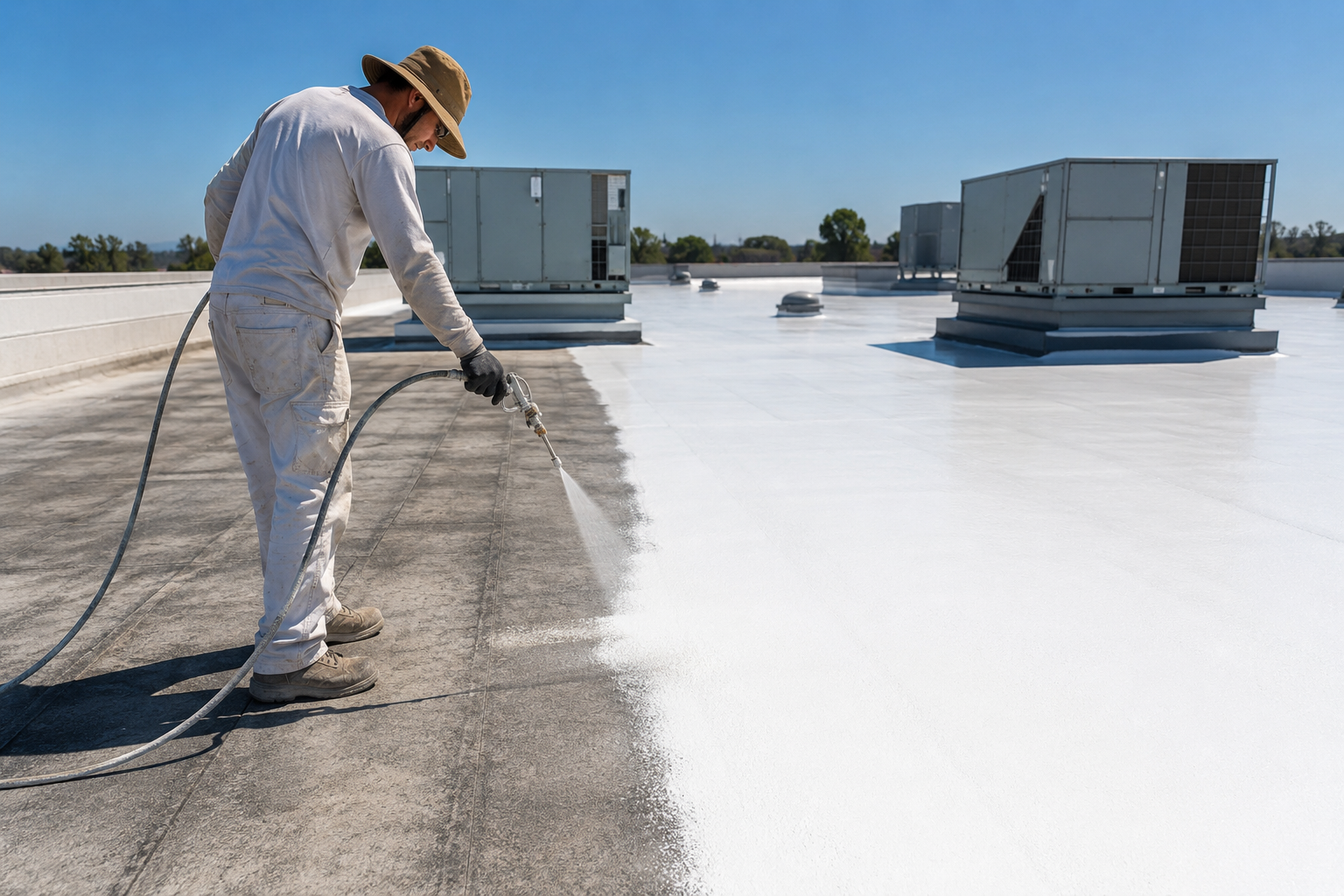
Most commercial roof coatings last between 10 and 20 years, depending on the coating type, the climate the roof is exposed to, and how well the system is maintained. Silicone coatings tend to fall at the longer end of that range, while acrylic coatings typically need to be refreshed sooner. With regular inspections and periodic recoating, a well-maintained roof coating system can protect a roof well beyond its original installation.
That’s a wide range, though, and the real answer depends on a handful of specific factors. Here’s what actually determines how long roof coating lasts on a flat or low-slope commercial roof in the Omaha and Lincoln area.
Roof Coating Lifespan by Type
Not all roof coatings are built the same, and the material matters more than almost anything else when it comes to longevity.
Acrylic — 5 to 10 years. Best for moderate climates and budget-conscious projects.
Silicone — 15 to 20 years. Best for roofs with ponding water or heavy UV exposure.
Polyurethane — 10 to 15 years. Best for high foot-traffic or impact-prone roofs.
Silicone roof coatings generally hold up the longest because they resist UV degradation and standing water better than other options, which matters in a climate like Nebraska’s, where roofs deal with both intense summer sun and heavy spring rain. According to the Roof Coatings Manufacturers Association, roof coatings are designed to protect and extend the service life of a roof system for new construction and existing roofs alike, and choosing the right coating type for your specific roof conditions is what makes that possible.
What Affects How Long a Roof Coating Lasts
Even the best coating material won’t perform to its full potential if a few key factors aren’t accounted for:
- Climate exposure. Nebraska’s swings between summer heat, winter freeze-thaw cycles, and hail-producing storms put more stress on a coating than a milder, more stable climate would.
- Roof substrate condition. A coating applied over a properly prepped, structurally sound roof lasts significantly longer than one applied over an already-deteriorating surface.
- Application quality. Coating thickness, coverage rate, and cure time all affect long-term performance — this is one of the biggest reasons DIY or rushed applications underperform.
- Ongoing maintenance. Roofs that get periodic inspections and minor touch-ups consistently outlast roofs that are coated once and never checked again.
We walk through many of these same considerations in Commercial Roof Coating Omaha: What Property Owners Need to Know Before Applying a System, which is worth a read if you’re still deciding whether coating is the right move for your building.
Signs It’s Time to Recoat
A roof coating doesn’t fail all at once — it wears gradually, and there are usually warning signs before a leak develops:
- Chalking or fading on the coating surface
- Thinning or worn areas, especially around seams, drains, and high-traffic zones
- Small cracks or pinholes appearing in the coating film
- Ponding water that sits longer than it used to
- The coating nearing the upper end of its expected lifespan for its material type
Catching these signs early is what turns a routine recoat into a simple maintenance item, instead of an emergency repair.
How to Extend the Life of Your Roof Coating
A few practical habits go a long way toward getting the maximum service life out of a coated roof:
- Schedule annual inspections, especially after major storms or extreme temperature swings.
- Clear debris and drains regularly so water isn’t sitting on the coating longer than it needs to.
- Address minor damage immediately rather than letting small issues expand.
- Recoat proactively near the end of a coating’s expected lifespan, rather than waiting for visible failure.
Our team covers the day-to-day side of this in Flat Roof Maintenance Omaha: Expert Tips from Elephant Guard, which pairs well with a coated roof system.
Roof Coating vs. Roof Replacement: Lifespan Comparison
A full roof replacement typically comes with a longer single lifespan than one coating cycle, but it also comes with a much higher upfront cost and significant downtime. A coated and well-maintained roof can be recoated multiple times over the years, often extending total roof life well beyond what a single coating cycle offers, and usually at a fraction of the cost of tearing off and replacing the whole system. We break down this comparison in more detail in Roof Coating Omaha: A Smarter Alternative to Roof Replacement.
FAQ: Roof Coating Lifespan
How long does silicone roof coating last? Silicone roof coatings typically last 15 to 20 years, making them one of the longer-lasting options, particularly on roofs with ponding water or heavy UV exposure.
Does roof coating need to be reapplied? Yes. Roof coatings are a maintenance item, not a one-time fix. Most systems are designed to be recoated on a regular cycle to keep the waterproofing barrier intact.
Is a longer-lasting coating always the better choice? Not necessarily. The best coating type depends on your roof’s substrate, drainage, and exposure — a qualified inspection is the best way to match the coating to the roof.
Find Out How Long Your Roof Coating Should Last
Every roof is different, and the only way to know what coating system — and what lifespan — makes sense for your building is a professional evaluation. Contact Elephant Guard for a free consultation, or explore our full range of flat and commercial roofing services. Call or text us at 402-416-6048.

- Bennington Roofing: When Roof Coating Makes Sense - September 3, 2026
- Council Bluffs Roofing: When Roof Coating Makes Sense - September 1, 2026
- Best Time of Year to Coat a Roof in Nebraska - August 11, 2026