
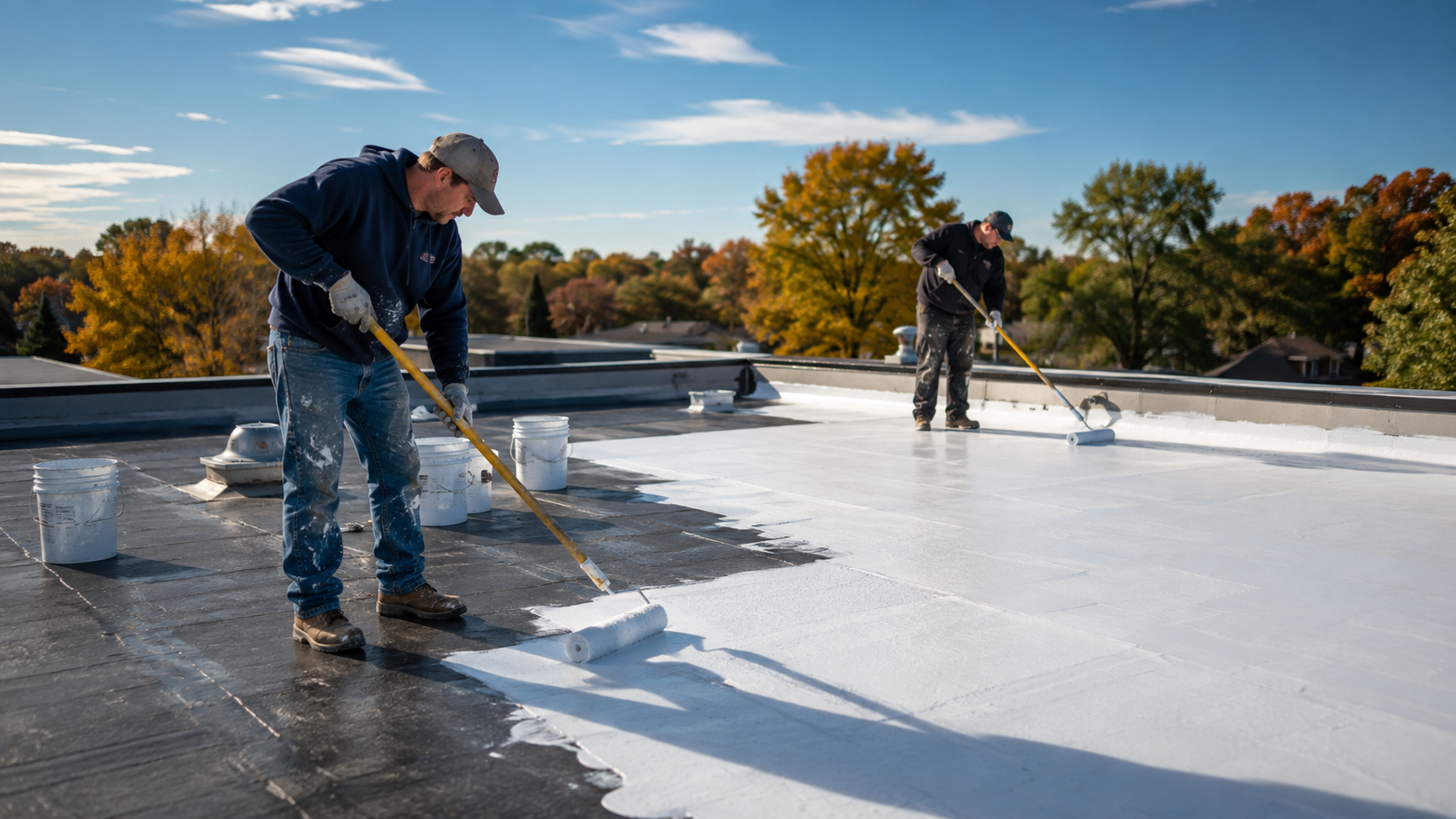
The best time of year to coat a roof in Nebraska is typically early fall, from mid-September through October, when temperatures are consistently moderate and rain is less frequent than in spring. Late spring, roughly May into early June, is the second-best window. Most roof coatings need air and surface temperatures in a specific range, generally between about 50°F and 90°F, along with dry conditions during application and for the first 24 to 48 hours of curing, which is why timing a coating project around Nebraska’s weather actually matters as much as the coating product itself.
Why Timing Matters for Roof Coating
A roof coating isn’t paint. It’s a liquid-applied system that has to cure into a continuous, seamless membrane, and that curing process is directly affected by temperature, humidity, and rain. Apply it too cold and it may not cure or bond correctly. Apply it in extreme heat and the surface can skin over before the layer underneath has fully cured, trapping moisture and weakening the finished membrane. Apply it right before a rain event and the coating can wash out or fail to form a proper film. Getting the timing right is one of the fundamentals covered by the National Roofing Contractors Association, which treats application conditions as a core part of a properly installed roofing or coating system, not an afterthought.
Nebraska’s Climate and What It Means for Coating Timing
Nebraska doesn’t make this easy. The state swings from humid, 90-plus-degree summer afternoons to sub-freezing winter stretches, often within a matter of months, and severe spring storms are common enough that we cover what to do about them separately in Storm Damage Roof Repair Omaha. That volatility narrows the realistic coating window considerably:
- Winter (December–February): Too cold, most days. Coatings generally won’t cure properly below freezing, and moisture from snow or ice compounds the problem.
- Spring (March–May): Warming up, but this is also peak severe weather season in Nebraska, with hail and heavy rain events that can interrupt a project mid-application.
- Summer (June–August): Warm enough, sometimes too warm. Extreme heat and humidity, plus frequent afternoon thunderstorms, make consistent multi-day dry stretches harder to count on.
- Fall (September–November): Generally the most stable stretch of weather Nebraska sees all year, with moderate temperatures and fewer severe storms.
Spring vs. Fall: Which Window Is Better?
Both spring and fall can work, but they come with different tradeoffs. A late-spring window (May into early June) offers warm, workable temperatures, but it overlaps with Nebraska’s most active severe weather season, which means a project can get pushed back by storms or, in some cases, needs to happen because storm damage already occurred. Early fall (mid-September through October) tends to offer the longer, more predictable dry stretches that a coating project benefits from, plus it gets the roof fully cured and protected before winter sets in. For most property owners without a pressing repair need, fall is the safer bet.
Why Summer and Winter Are Riskier for Coating Projects
Summer heat can cause a coating to cure unevenly, with the surface skinning over while moisture is still trapped underneath, which weakens the finished membrane over time. Afternoon thunderstorms, common across the metro in July and August, add scheduling risk on top of that. Winter is more straightforward: most coatings simply won’t cure correctly below their minimum application temperature, and a coating applied in marginal cold-weather conditions is more likely to underperform or fail early. That’s part of why we cover realistic lifespan expectations, including the impact of application conditions, in How Long Does Roof Coating Last?
How Elephant Guard Plans Roof Coating Projects Around Nebraska Weather
We build project schedules around actual weather windows, not just calendar availability. That means checking forecasted temperature ranges, humidity, and rain probability before locking in an application date, and sequencing work to give the coating the dry cure time it needs. If your roof needs attention outside of an ideal weather window, whether from storm damage or ongoing wear, we can also advise on whether it makes sense to do interim repairs now and schedule the full coating for the next good stretch. You can see the full scope of what that process looks like on our commercial roofing services page, and the reasoning behind coating versus replacement in Roof Coating Omaha: A Smarter Alternative to Roof Replacement.
FAQ: Roof Coating Timing in Nebraska
What temperature is too cold to apply roof coating? Most roof coatings shouldn’t be applied when temperatures are near or below freezing. Many products have a minimum application temperature in the 50°F range, and going below that risks improper curing.
Can roof coating be applied in summer heat? It can, but extreme heat increases the risk of the coating curing unevenly and raises the chance of an afternoon storm interrupting the process. Early morning application during summer can help, but it’s not the ideal window overall.
How long does roof coating need to stay dry after application? Most coatings need roughly 24 to 48 hours of dry weather to cure properly, which is one of the main reasons a stable, low-storm-risk stretch of days matters more than any single day’s forecast.
Plan Your Roof Coating Project Around the Right Season
Timing a roof coating project right can make a real difference in how well it performs. Contact Elephant Guard to schedule an inspection and get a recommended timeline built around your roof and the season ahead, or call or text us at 402-416-6048.

- Bennington Roofing: When Roof Coating Makes Sense - September 3, 2026
- Council Bluffs Roofing: When Roof Coating Makes Sense - September 1, 2026
- Best Time of Year to Coat a Roof in Nebraska - August 11, 2026